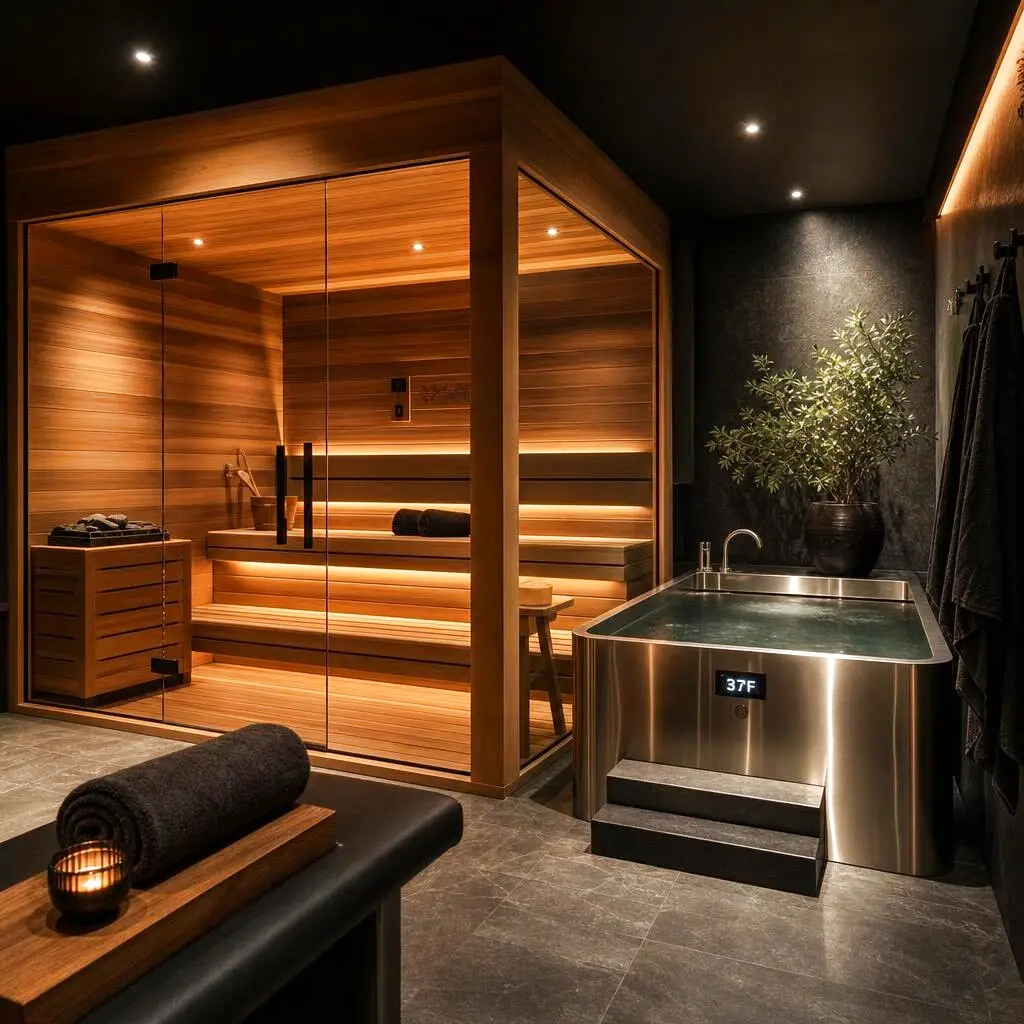
The three home sauna types differ mainly in how they heat you: a traditional sauna heats the air to 150–195°F for an intense dry-or-wet heat, an infrared sauna warms your body directly at a gentler 120–150°F, and a steam room uses 100% humidity at a lower temperature for a wet, respiratory-friendly experience. For most Utah homes, traditional is the classic high-heat choice, infrared is the most affordable and easiest to install, and steam integrates beautifully into a luxury bathroom. Here's how to pick.
Quick Comparison
Traditional vs. infrared vs. steam
| Factor | Traditional | Infrared | Steam |
|---|---|---|---|
| Heat type | Hot air (dry or wet) | Radiant heat on the body | Hot, 100% humid air |
| Temperature | 150 – 195°F | 120 – 150°F | 110 – 120°F |
| Warm-up time | 30 – 45 min | 10 – 20 min | 10 – 20 min |
| Typical cost | $8k – $30k+ | $5k – $15k | $10k – $25k+ |
| Install needs | 240V, ventilation, cedar build | Often plug-in, minimal | Generator, waterproofing, drain |
| Experience | Intense, classic löyly | Gentle, lower heat | Wet, spa-like, sinus relief |
| Best for | Purists, cold plunge pairing | Budget & easy retrofit | Bathroom integration |
What Drives the Cost
Sauna pricing is driven less by the heat type and more by the build around it. Size is the first lever: a two-person infrared cabin costs a fraction of a four-to-six-person traditional room. Materials matter next — clear-grade cedar, hemlock, and thermally modified woods carry a premium over basic panels, and glass fronts or full glass walls add both cost and drama. Then come the mechanicals: a dedicated 240V circuit, a steam generator, waterproofing, a drain, and ventilation all add line items. Finally, site conditions — whether you are retrofitting into a finished space or building fresh during a larger remodel — swing the number meaningfully.
- Size and seating: a compact two-person unit is far cheaper than a four-to-six-person room.
- Materials: clear cedar, hemlock, glass fronts, and custom benching drive the finish budget.
- Mechanicals: 240V wiring, steam generators, drains, and vapor barriers add real cost.
- Retrofit vs. new build: integrating during a remodel is typically cheaper than carving into a finished room later.
Traditional Sauna: The Classic Experience
A traditional sauna uses an electric (or wood-burning) heater to bring the air to high temperatures, with the option to pour water over the stones for a burst of steam known as löyly. It delivers the most authentic, intense heat and pairs perfectly with a cold plunge — a combination Utah's active, ski-and-mountain crowd loves. It requires a proper cedar or hemlock build, ventilation, and usually a 240V circuit, so it's more involved to install but delivers the deepest experience. Popular in mountain homes near Park City and Heber, where a post-ski sauna is a genuine lifestyle draw.
Infrared Sauna: Accessible and Efficient
Infrared saunas skip heating the air and instead use panels to warm your body directly, so they operate at lower temperatures, heat up fast, and use less power. Many are modular cabins that need little more than an outlet, making them the easiest and most affordable to add — ideal for a spare room, basement, or home gym. If you want the everyday convenience without a major build, infrared is usually the entry point.
Steam Room: The Wet, Spa-Like Option
A steam room runs cooler but at full humidity, producing a wet heat many find easier to breathe and gentler on the skin. It requires a steam generator, full waterproofing, a sloped ceiling, a drain, and proper ventilation — which is why it's typically built into a luxury bathroom rather than added as a standalone cabin. If you're already remodeling a primary bath, integrating a steam shower is a natural upgrade. See our 2026 luxury bathroom trends for how steam fits the current spa-bath direction.
The Cold Plunge Pairing
Hot-cold contrast therapy is a major driver of home wellness builds. A sauna paired with a cold plunge creates a full contrast-therapy routine at home — especially appealing in Utah, where a cold plunge after a day on the slopes or trails has genuine recovery benefits. If wellness is your goal, plan the two together so the space, drainage, and layout support both.
Where to Put a Home Sauna
Placement shapes both cost and daily use. A finished basement is the most popular home for a dedicated wellness suite because it has the ceiling height, the floor drainage potential, and the separation from living spaces that heat and moisture features want. Home gyms and bonus rooms are common for infrared cabins, while a primary bathroom is the natural place for steam. A well-designed utility or mudroom-adjacent zone can also work when it puts the sauna near a shower and drain.
Regional Notes Across Utah
Mountain markets like Park City and Midway lean toward traditional saunas paired with cold plunges as part of an active-recovery lifestyle. Valley homes across Salt Lake City, Draper, and Lehi often integrate infrared or steam into finished basements and primary baths. In St. George, where summers are hot and dry, homeowners frequently favor steam for its humidity or pair a sauna with a plunge specifically for the cooling contrast. The through-line everywhere is Utah's dry climate — moisture-heavy features must be detailed correctly so the surrounding structure stays protected.
Common Mistakes to Avoid
- Undersizing the space: account for benches, clearances, and a comfortable entry — a cramped sauna gets used less.
- Skimping on ventilation: inadequate airflow traps moisture and degrades wood and adjacent framing.
- Ignoring electrical capacity: a traditional or larger unit needs a dedicated 240V circuit sized correctly by an electrician.
- Forgetting drainage for wet options: steam and plunge features need proper drains and sloped, waterproofed floors.
- Choosing the heat type last: decide traditional vs. infrared vs. steam early, since it changes framing, mechanicals, and budget.
Utah Installation Considerations
- Electrical: Traditional saunas usually need a dedicated 240V circuit; infrared often plugs in.
- Moisture control: Steam and wet saunas require correct vapor barriers and ventilation to protect the home — critical in Utah's dry climate where poor detailing causes issues.
- Location: Basements, home gyms, and primary baths are the most common placements; a finished basement is a popular home for a sauna suite.
- Permits: Electrical and plumbing work typically require permits — see our Utah building permits guide.
Materials and Finishes That Elevate the Experience
Wood species is the defining choice in a traditional or infrared cabin. Western red cedar is the classic — aromatic, naturally rot-resistant, and cool to the touch — while hemlock offers a cleaner, near-odorless look for those sensitive to scent. Thermally modified woods add durability and a darker, contemporary tone. Beyond the wood, the details that make a sauna feel custom rather than off-the-shelf include glass fronts or a full glass wall for an open, architectural feel, integrated backrests and layered benching, low-voltage or fiber-optic lighting for ambiance, and Bluetooth audio. In a steam room, large-format porcelain or a seamless microcement finish keeps the surfaces easy to clean and visually calm.
Running Costs and Everyday Use
Operating cost is modest relative to install. Infrared units draw the least power and heat in 10–20 minutes, which makes them the most likely to see daily use. Traditional saunas use more energy and take 30–45 minutes to reach temperature, so they suit planned sessions. Steam rooms fall in between but add water use and demand diligent ventilation between sessions to keep the space dry. Whichever you choose, budget a few minutes of after-use airing and occasional wood or surface care — a little upkeep keeps the space fresh and protects the surrounding structure for the long haul.
How to Choose
- Want the classic, intense experience and a cold plunge? Traditional.
- Want the easiest, most affordable install? Infrared.
- Already remodeling a bathroom and want wet heat? Steam.
- Building a dedicated wellness zone? Consider traditional + cold plunge together.