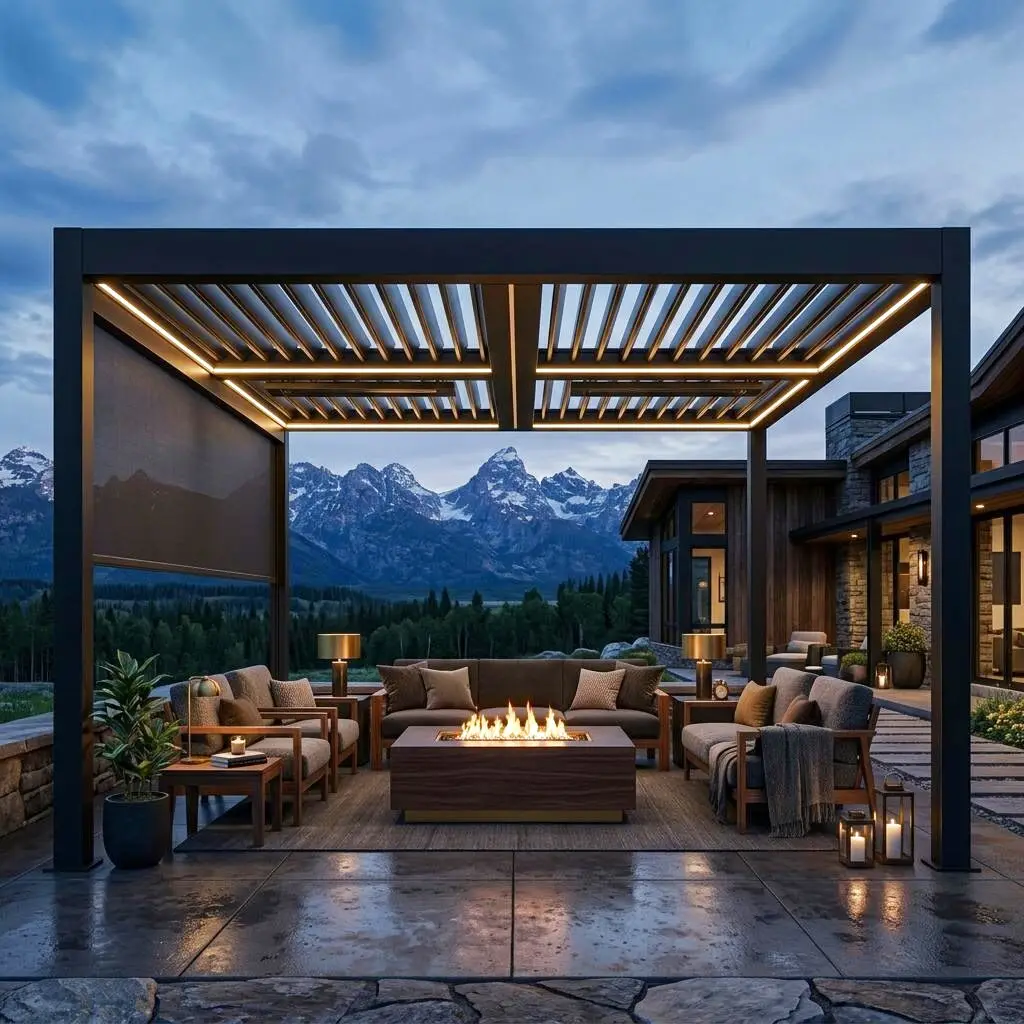
Motorized Louvered Pergolas
Control the sun. Block the rain. Rule your patio.
Service Tiers
The Sun Shade
A beautiful, functional louvered roof for sun control.
- Motorized louvers
- Extruded aluminum construction
- Remote control operation
- Standard color finishes
The Smart Patio
Integrated systems for evening and all-weather enjoyment.
- Integrated LED lighting
- Smart home integration
- Rain sensors (auto-close)
- Custom powder-coat colors
The All-Season Room
A fully enclosed, heated outdoor living space.
- Motorized privacy/wind screens
- Integrated infrared heaters
- Ceiling fans
- Architectural column wraps
- Complete weather protection
Key Benefits
- Switch between full sun, partial shade, or solid rain protection instantly
- Extend outdoor living seasons with heaters and wind screens
- Zero maintenance aluminum construction (no rotting wood)
- Protect outdoor furniture from harsh Utah UV rays and snow
- Massive aesthetic upgrade over fabric awnings or wood pergolas
Our Process
Design & Footprints
Planning the dimensions and securing structural footings.
Electrical Rough-in
Running power to the patio for motors, lights, and heaters.
Frame Assembly
Erecting the heavy-duty aluminum posts and beams.
Louver & Tech Install
Installing the rotating blades and connecting the motors.
Programming
Setting up remotes, sensors, and smart home apps.
Cost Guide
A motorized louvered pergola runs from about $8k for a basic sun-shade structure to $45k or more for a fully enclosed, heated all-season room. Cost is driven by size, snow-load engineering, and how many comfort systems you integrate. Utah's intense UV and heavy mountain snow make the structural rating and drainage design especially important, so a properly engineered aluminum system is worth the investment. The estimates below reflect typical Wasatch and Park City patios.
Footprint size
Cost scales with square footage of coverage and the number of posts and beams required to span it.
Snow-load engineering
Systems rated for heavy Utah snow use thicker extrusions and more robust louvers, adding cost but preventing failure under load.
Integrated systems
LED lighting, rain sensors, and smart-home control add convenience and roughly $3k–$8k over a manual sun-shade.
Enclosure elements
Motorized privacy and wind screens plus infrared heaters transform an open pergola into a usable all-season room, adding the most cost.
Foundation and electrical
Structural footings and running power out to the patio for motors, lights, and heaters are prerequisite site costs.
Project Timeline
Design & footings
1–2 weeksPlanning dimensions, engineering for snow load, and securing structural footings.
Electrical rough-in
1–3 daysRunning power to the patio for motors, lights, and heaters.
Frame assembly
2–3 daysErecting the heavy-duty aluminum posts and beams.
Louver & tech install
1–2 daysInstalling the rotating blades and connecting the motors, sensors, and lighting.
Programming
1 daySetting up remotes, rain sensors, and smart-home app control.
Materials & Options
Extruded aluminum framing
Heavy-gauge extruded aluminum won't rot, warp, or rust and carries the snow loads a wood pergola never could.
Interlocking louver blades
When closed, the blades interlock into a watertight roof and channel runoff into integrated gutters within the posts.
Integrated LED lighting
Perimeter and blade-integrated LEDs extend patio use into the evening with dimmable, low-heat light.
Motorized screens
Retractable privacy and wind screens block low sun and cold breezes, dramatically extending the usable season.
Powder-coat finish
A durable powder-coat in matte black, bronze, or custom colors resists Utah UV fade far better than paint.
Permits in Utah
A motorized louvered pergola is a permanent structure with footings and electrical, so a building permit is required in Utah, and larger or attached units may need structural review for snow load. Inspectors verify the footings, the structural attachment to the home if it's attached, and the electrical work for motors, lights, and heaters. We handle the engineering documentation, pull the building and electrical permits, and coordinate the footing and final inspections.
Maintenance
- Rinse the louvers and frame a couple of times a year to remove dust, pollen, and mineral residue.
- Clear the integrated gutters and post drains of debris so closed-roof runoff flows freely.
- Cycle the louvers open and closed periodically in the off-season to keep the motors and pivots free.
- Test the rain sensor before the wet season so the auto-close feature works when you need it.
- Brush heavy snow off the closed roof after major storms if accumulation approaches the rated load.
Common Mistakes to Avoid
Buying a unit not rated for Utah snow
A pergola engineered for mild climates can buckle under Wasatch snow load, a dangerous and expensive failure.
Neglecting the gutter and drainage design
If the closed-roof runoff has nowhere to go, water sheets off the edges or pools, defeating the rain protection.
Not planning screens up front
Retrofitting motorized screens later is harder and pricier than integrating the tracks into the frame during the initial build.
Skimping on footings
Undersized footings let a tall pergola shift or heave with Utah's freeze-thaw cycles, throwing off the louver alignment.
Related Services
Frequently Asked Questions
Request an Estimate
Tell us about your motorized louvered pergolas project.