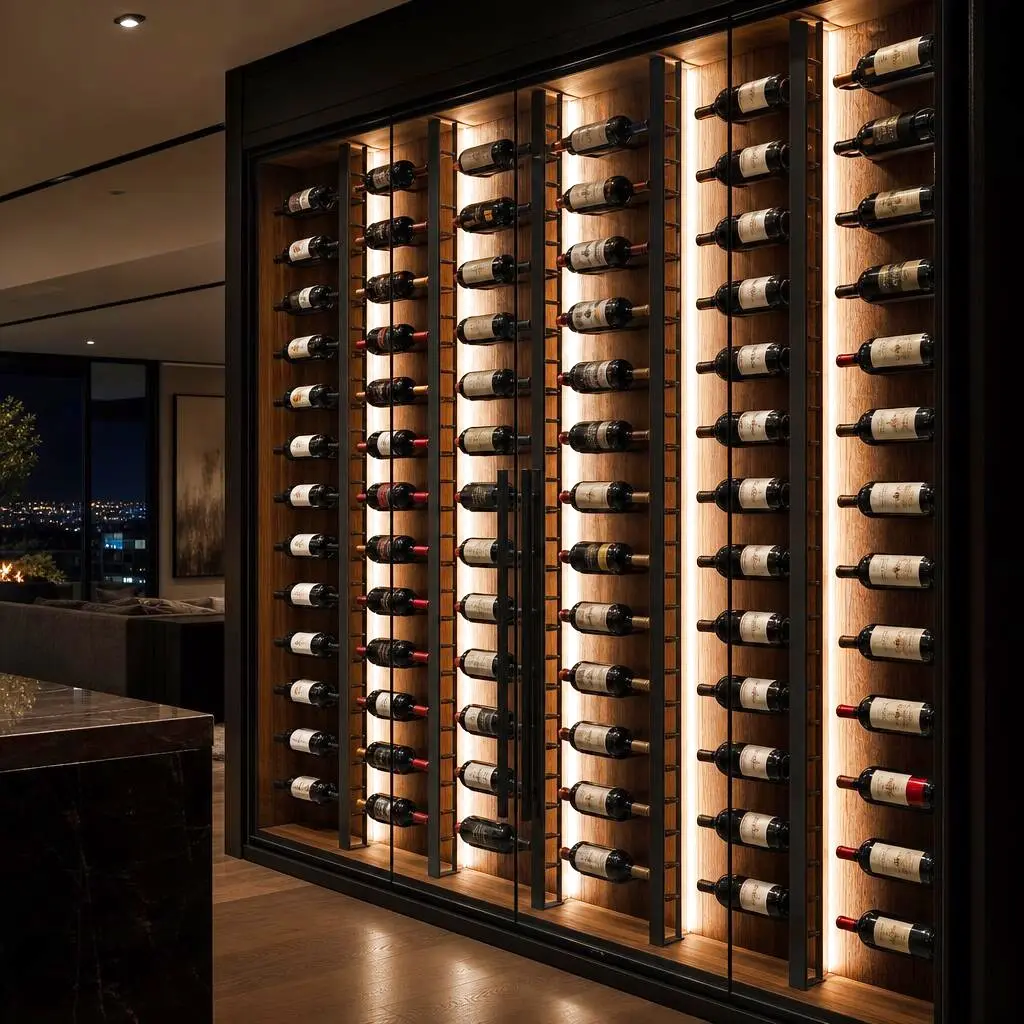
Glass Wine Walls
Interior jewelry for the modern collector.
Service Tiers
The Ambient Display
A stunning, non-climate-controlled visual display.
- Frameless glass enclosure
- Metal peg or floating racks
- LED accent lighting
- Perfect for fast-turnover collections
The Under-Stair Cellar
Transforming dead space into a climate-controlled jewel box.
- Custom angled glass
- Through-wall cooling unit
- Vapor barrier insulation
- Custom backing (wood/stone)
The Grand Collector
A massive, fully climate-controlled architectural showpiece.
- Ducted cooling systems
- Smart climate monitoring
- Hundreds of bottle capacity
- Custom metal fabrication
- Museum-quality lighting
Key Benefits
- Turn a dark basement corner or under-stair space into a focal point
- Protect fine wines with precise temperature and humidity control
- Modernize the classic "dungeon" wine cellar into a bright, visible feature
- Create a stunning conversation piece for dining and entertaining
- Highly customizable finishes to match your home’s exact aesthetic
Our Process
Vapor Barrier Prep
Crucial for climate control: sealing the space to prevent condensation in your walls.
HVAC Integration
Installing the specialized wine cooling unit and ducting.
Finishes & Racking
Applying wall treatments and installing the metal peg or cable racking.
Lighting
Wiring zero-heat LED channels to highlight the bottles.
Glass Enclosure
Setting custom-measured, thick tempered glass panels and doors.
Cost Guide
A glass wine wall ranges from about $5k for an ambient, non-cooled display to $60k or more for a grand climate-controlled showpiece holding hundreds of bottles. The defining cost question is whether the wall is climate-controlled: a display for fast-turnover bottles needs only racking, glass, and light, while a true cellar requires cooling, insulation, and a vapor barrier. The estimates below reflect typical Utah homes where under-stair and basement corners become the feature.
Climate control
Adding a cooling unit, insulation, and vapor barrier to protect fine wine long-term can add $8k–$25k over an ambient display.
Bottle capacity
Larger walls need more racking and a bigger cooling unit; capacity is the clearest driver of the overall figure.
Glass specification
Thick tempered, and for cooled cellars dual-pane, glass with a custom door raises cost over a simple frameless panel.
Racking system
Metal label-forward racking (like VintageView) and custom fabrication cost more than basic pegs but define the modern look.
Location complexity
Converting an odd under-stair space or tying a cooling unit into the home's systems adds custom fabrication and labor.
Project Timeline
Vapor barrier prep
2–4 daysSealing the space to prevent condensation in the walls — the critical foundation for any cooled cellar.
Cooling integration
2–4 daysInstalling the specialized wine cooling unit and any required ducting.
Finishes & racking
3–6 daysApplying wall treatments and installing the metal or cable racking system.
Lighting
1–2 daysWiring zero-heat LED channels to highlight the bottles.
Glass enclosure
1–2 daysSetting custom-measured tempered glass panels and the door.
Materials & Options
Label-forward metal racking
Minimalist metal racks that display the label face-out turn a bottle collection into a designed, gallery-like feature.
Through-wall cooling unit
A self-contained cooling unit holds the cellar at an ideal temperature and humidity without the cost of ducted refrigeration.
Vapor-barrier insulation
A sealed vapor barrier is essential to prevent condensation from forming inside the walls of a cooled cellar.
Tempered display glass
Thick tempered glass — dual-pane for cooled cellars — provides a clear, safe, and thermally sound enclosure.
Zero-heat LED lighting
Cool-running LED channels illuminate the bottles beautifully without adding heat that would stress the cooling system.
Permits in Utah
A non-cooled ambient wine display generally needs only an electrical permit for its lighting. A climate-controlled cellar adds a cooling unit and often a dedicated circuit, so electrical and possibly mechanical permits apply and inspectors verify the wiring and the cooling installation. Because a cooled cellar's vapor barrier affects the building envelope, proper construction matters even where a permit isn't strictly required. We advise on the specifics and pull the electrical and mechanical permits your build requires.
Maintenance
- Clean the cooling unit's coils and filter on the manufacturer's schedule to keep it running efficiently.
- Monitor the cellar's temperature and humidity with a gauge and adjust the unit seasonally.
- Wipe the glass regularly and check the door seal so the cooled unit isn't working against leaks.
- Inspect for any condensation on or behind the glass, which would signal a vapor-barrier issue to address.
- Dust the racking and confirm the LED channels remain cool-running and fully functional.
Common Mistakes to Avoid
Skipping the vapor barrier on a cooled cellar
Without it, cold cellar air meets warm house framing and condenses inside the walls, causing hidden mold and rot.
Using heat-emitting lighting
Standard bulbs add heat that forces the cooling unit to overwork and can damage the wine — LED is the only right choice.
Undersizing the cooling unit
A unit too small for the space and glass area can't hold temperature during Utah summer heat, defeating long-term storage.
Choosing single-pane glass for a cellar
A cooled cellar behind single-pane glass sweats and loses efficiency; the glass spec has to match the climate goal.
Related Services
Frequently Asked Questions
Request an Estimate
Tell us about your glass wine walls project.