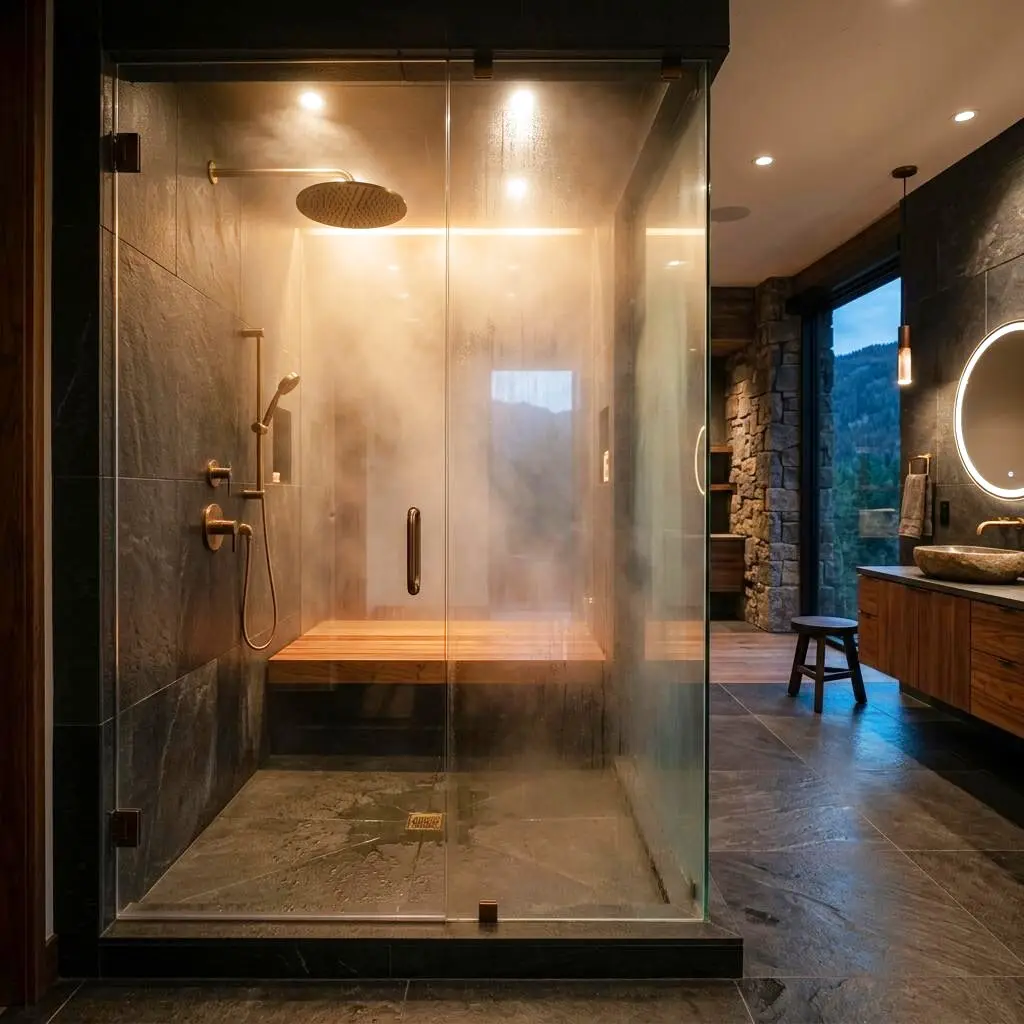
Steam Showers & Spa Conversions
Daily wellness. Endless steam.
Service Tiers
The Generator Retrofit
Adding a steam generator to a properly enclosed existing shower.
- Steam generator installation
- Digital control panel
- Sealed glass door upgrade
- Vapor-proofing assessment
The Spa Shower Build
A full tear-out and rebuild designed specifically for steam.
- Sloped ceiling (prevents dripping)
- Complete vapor barrier system
- Custom tile or microcement
- Built-in bench seating
The Sensory Experience
The ultimate luxury steam room with smart integrations.
- Chromotherapy lighting
- Aromatherapy injection
- In-shower audio systems
- Multiple shower heads
- Oversized glass enclosures
Key Benefits
- Relieve stress and muscle tension daily
- Improve respiratory health and skin clarity
- Create a 5-star hotel experience in your master bath
- Increase the resale value of luxury homes
- Compact wellness solution that fits in an existing bathroom
Our Process
Vapor-Proofing
The most critical step: sealing the walls and ceiling so moisture cannot enter the home’s framing.
Ceiling Sloping
Framing the ceiling at an angle so condensation rolls down the wall, not on your head.
Generator Install
Placing the steam unit in a nearby closet or attic and running lines.
Surface Finishing
Installing tile or seamless microcement.
Glass Enclosure
Installing floor-to-ceiling glass to trap the steam.
Cost Guide
A steam shower costs more than a standard shower because it must be a fully sealed, vapor-proof enclosure — projects run from about $7.5k to add a generator to a suitable existing shower up to $30k or more for a sensory experience with chromotherapy, aromatherapy, and audio. The dominant cost is the vapor-proofing, sloped ceiling, and full glass enclosure required to contain steam. The estimates below reflect typical Utah master-bath conversions.
Retrofit vs. full rebuild
Adding a generator to an already vapor-tight, fully enclosable shower is far cheaper than tearing out and rebuilding a standard shower for steam.
Vapor-proofing and ceiling slope
A complete waterproofing membrane and a sloped ceiling to shed condensation are non-negotiable and add labor over a normal shower.
Generator size and location
A properly sized generator plus running lines from a closet or attic up to 50 feet away affects both material and labor cost.
Glass enclosure
Floor-to-ceiling glass with a sealed top and door is required to trap steam and costs more than a partial glass panel.
Sensory features
Chromotherapy lighting, aromatherapy injection, in-shower audio, and multiple heads push the build to the top of the range.
Project Timeline
Vapor-proofing
2–3 daysSealing walls and ceiling so moisture cannot reach the home's framing — the most critical phase.
Ceiling sloping
1–2 daysFraming the ceiling at an angle so condensation rolls down the wall rather than dripping.
Generator install
1–2 daysPlacing the steam unit in a nearby closet or attic and running the steam and control lines.
Surface finishing
3–6 daysInstalling tile or seamless microcement over the waterproofing.
Glass enclosure
1–2 daysInstalling the floor-to-ceiling glass with a sealed top to trap the steam.
Materials & Options
Waterproofing membrane
A continuous membrane on all walls and the ceiling keeps steam and condensation out of the framing — the heart of a lasting steam shower.
Residential steam generator
A briefcase-sized generator produces on-demand steam and can be tucked in a nearby closet, vanity, or heated attic.
Digital control panel
An in-shower control sets temperature, session time, and integrated features like lighting and aroma.
Full-height tempered glass
A sealed floor-to-ceiling enclosure with a tight door contains steam so the session actually works.
Non-slip porcelain or microcement
Durable, low-porosity surfaces handle constant humidity and provide safe footing on wet floors.
Permits in Utah
A steam shower involves electrical (the generator circuit and controls), plumbing (supply and drain), and sometimes minor framing, so a permit is required in Utah jurisdictions. Inspectors verify the dedicated circuit and GFCI protection, the plumbing connections, and — where visible — the waterproofing approach, since a failed vapor barrier causes structural damage. We coordinate the electrical and plumbing permits, build to code for the sealed enclosure, and schedule the inspections.
Maintenance
- Run the shower fan and leave the door open after each session so the enclosure dries fully.
- Descale the steam generator on the manufacturer's schedule, especially given Utah's hard water.
- Wipe down glass and surfaces regularly to prevent mineral buildup and soap film.
- Inspect the door and top-panel seals annually and replace any that have degraded.
- Check the generator's drain and lines periodically for scale or leaks.
Common Mistakes to Avoid
Converting a shower with no vapor barrier
Steam drives moisture into unsealed walls, rotting framing and causing hidden mold that's expensive to remediate.
Leaving the ceiling flat
A flat ceiling drips condensation straight down on the user; a sloped ceiling is required to channel it to the wall.
Under-enclosing with partial glass
Steam escapes through open gaps, so the shower never reaches temperature and wastes energy trying.
Ignoring hard-water scaling
Utah's hard water quickly scales an un-serviced generator, cutting output and shortening its life.
Related Services
Frequently Asked Questions
Request an Estimate
Tell us about your steam showers & spa conversions project.