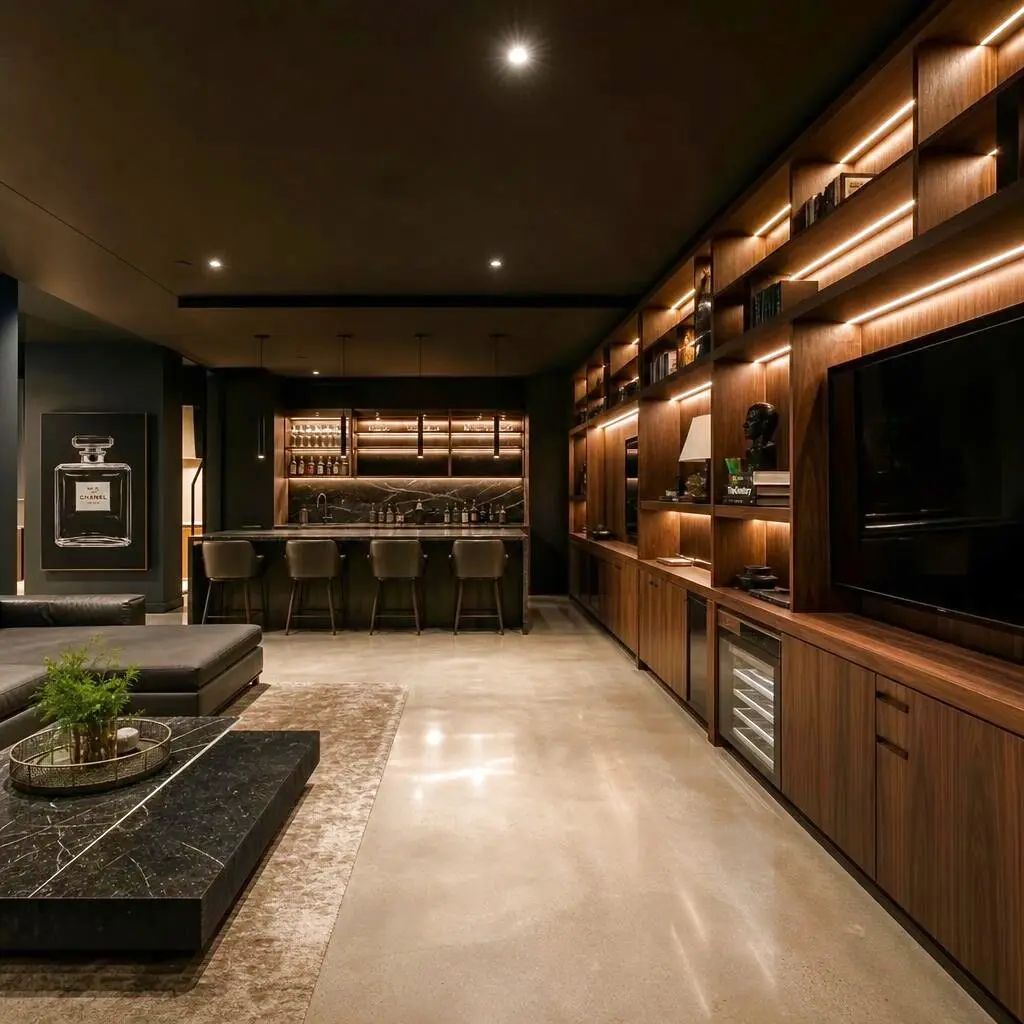
For most Utah homeowners, an internal basement apartment (IADU) is the faster, more affordable path to rental income because it uses space you already have, while a detached ADU costs more and takes longer but delivers full privacy, independence, and typically higher rent and resale value. The right answer depends on your lot, your budget, your city's rules, and whether you value tenant separation over lower cost. This guide compares them head to head so you can choose with clear eyes.
The Two Options, Defined
- Internal ADU (IADU) / basement apartment: A self-contained unit created inside your existing home — usually the basement — with its own kitchen, bath, and entrance.
- Detached ADU: A separate structure on your lot (a standalone unit or a unit above a garage) with its own everything, physically apart from the main house.
Head-to-Head Comparison
Basement apartment vs. detached ADU in Utah
| Factor | Basement Apartment (IADU) | Detached ADU |
|---|---|---|
| Typical cost | $70k – $150k | $150k – $350k+ |
| Build time | 3 – 5 months | 6 – 12 months |
| Privacy | Shares the structure | Fully separate |
| Rent potential | Good | Higher |
| Uses existing space | Yes | No — new construction |
| Lot requirements | Minimal | Needs lot area & setbacks |
| Resale appeal | Strong | Strongest |
| Permitting complexity | Moderate | Higher |
Cost and Speed
The basement apartment wins decisively on both. Because the foundation, walls, and roof already exist, an IADU is roughly half the cost of a detached ADU and finishes in a fraction of the time. We break the numbers down in how much a basement conversion costs in Utah. A detached ADU is a ground-up build — foundation, framing, roof, utilities, and its own connections — which is why it costs more and takes longer.
The hidden cost drivers most owners miss
The headline numbers hide a few line items that quietly swing budgets. For a basement apartment, the biggest fork is whether your slab already has a plumbing rough-in and whether any bedroom needs a new egress window cut into the foundation — each opening typically adds $4,000 to $9,000. For a detached ADU, running new water, sewer, gas, and electrical service from the street or main panel can add $15,000 to $40,000+ before you have poured a single wall, and utility connection fees vary widely by city.
- Utility connections: Minimal for an IADU (it taps existing systems); a major line item for a detached ADU.
- Site work & grading: Nonexistent for a basement; often significant on the sloped Wasatch Front lots where a detached unit needs excavation and retaining.
- Soundproofing: A real cost for an IADU sharing a floor/ceiling assembly; a non-issue for a detached unit.
- Impact & permit fees: Usually higher for new detached construction than for an interior conversion.
Privacy and Tenant Appeal
This is where the detached ADU earns its premium. A separate structure means no shared walls, no shared entry, and full independence for both you and your tenant — which commands higher rent and attracts longer-term renters. A well-built basement apartment can feel private with proper soundproofing and a dedicated entrance, but it will never match a standalone unit for true separation.
Think about who you actually want living in the unit. A basement apartment often suits family members, a nanny, an aging parent, or a single tenant who values a lower rent and doesn't mind sharing the lot. A detached ADU appeals to renters who want the feel of their own home — couples, remote workers who need quiet, or short-term guests in vacation markets. Matching the unit type to your target renter is often more important than squeezing out the last dollar of construction savings, because a well-matched tenant stays longer and treats the space better.
Multi-generational and flex use
Rental income isn't the only reason Utah owners add a unit. Many build to house aging parents, adult children, or a home office that can convert to rental later. A basement apartment shines here because it keeps everyone under one roof with a short, sheltered path between spaces during Utah winters. A detached ADU offers more independence for a family member who wants their own front door. Either way, designing for flexibility — so the space can shift from guest suite to rental to office over time — protects your investment as your needs change.
Lot and Zoning Realities
A basement apartment needs almost nothing from your lot — it's inside the home. A detached ADU needs sufficient lot area, has to respect setbacks and height limits, and may trigger parking and utility requirements. On the tighter lots common in older Salt Lake City neighborhoods, a detached ADU may not physically fit, making the basement the only practical option. On larger lots in Draper, South Jordan, or Herriman, a detached ADU becomes viable.
Region-by-Region Notes for Utah
Where your home sits changes the math. In the Salt Lake valley, high rental demand near jobs and transit makes either option pay, but small lots often favor a basement apartment. In Park City and the mountain corridor, snow loads, steep grades, and design-review overlays make a detached ADU pricier to build — but nightly-rate and long-term rents run high enough to justify it for many owners. In St. George, flatter, larger lots and a strong seasonal-rental market make detached ADUs comparatively easy to site, while the dry desert climate simplifies foundation and drainage detailing.
Climate matters too. Utah's cold winters mean a basement apartment stays naturally temperate year-round with modest heating, while a detached ADU needs a full, well-insulated envelope and its own heating and cooling to handle both summer heat and sub-freezing nights. Whichever you choose, code-compliant egress and proper moisture management are non-negotiable — see our basement & ADU conversions approach for how we detail both.
Utah Legal Basics
Utah has made internal ADUs easier to create statewide, but the specifics — parking, owner-occupancy, size caps, and licensing — are set at the city level and vary. Both options require permits, code-compliant egress for bedrooms, and a legal separate entrance. Our guide to Utah IADU laws covers the internal-unit rules, and the conversion work is our basement & ADU conversions specialty. Because rules differ by municipality, always verify with your local planning department before committing.
Payback and the Long View
Both options can pay for themselves over time, but the timelines differ. A basement apartment's lower cost means a shorter payback period on rent, which is why owners chasing income first often start there. A detached ADU costs more up front but commands higher rent and adds the strongest resale premium, so its return compounds over a longer horizon — especially in appreciating markets. If you plan to hold the home for years, the detached unit's higher ceiling may win; if you want cash flow sooner or a quicker exit, the basement usually makes more sense.
Don't forget the finished-space quality itself drives rent and resale as much as the structure type. Thoughtful daylight, sound separation, durable finishes, and a genuinely private entrance matter to renters and appraisers alike. A well-executed basement apartment can out-earn a poorly built detached unit — build quality and layout are the real levers once you've chosen a path.
How to Decide
- Choose a basement apartment if you want the fastest, most affordable route to rental income and you have unfinished or underused basement space.
- Choose a detached ADU if you have the lot, the budget, and you prioritize privacy, maximum rent, and the strongest resale bump.
- Check your city first — zoning, parking, and owner-occupancy rules may make one option far easier than the other.
- Consider egress and entrances early — both units need code-compliant egress and a separate entrance.
Mistakes to Avoid
- Skipping the city check. Building or advertising a unit that isn't legally permitted can force costly rework and create resale and insurance headaches.
- Under-budgeting egress. Every bedroom needs a compliant opening; treat each one as its own line item, not an afterthought.
- Ignoring soundproofing in a basement unit. Thin floor/ceiling assemblies are the fastest way to lose a good long-term tenant.
- Forgetting parking. Many cities require a dedicated off-street space for a rental unit; verify before you commit to a layout.
- Deferring the entrance decision. A separate, code-compliant walkout or exterior entry is far cheaper to plan in than to retrofit.