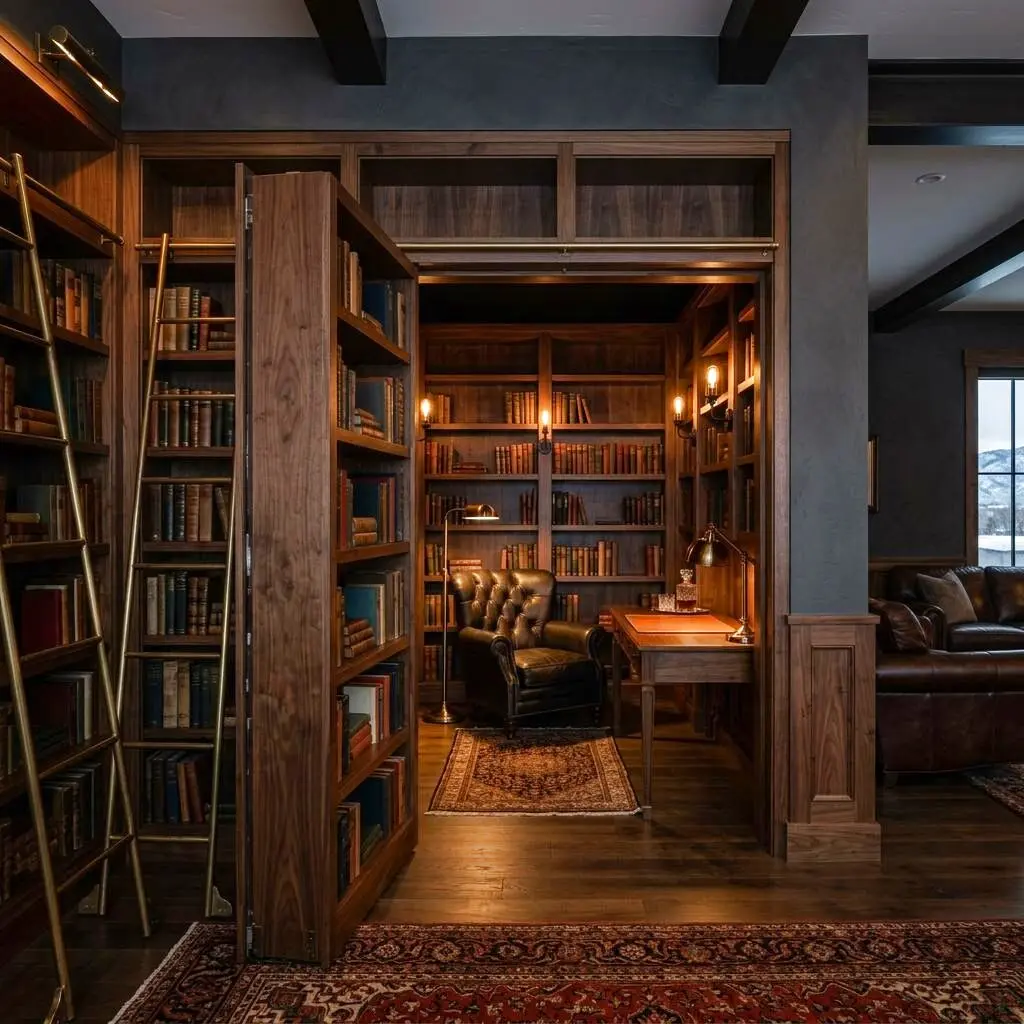
Hidden Doors & Secret Rooms
The ultimate architectural surprise.
Service Tiers
The Classic Bookshelf
A beautiful, functional bookshelf that swings open.
- Pre-hung bookshelf door
- Heavy-duty concealed hinges
- Paint or stain grade
- Magnetic locking
The Custom Match
A door designed to perfectly blend into existing wall panels or cabinetry.
- Custom millwork matching
- In-swing or out-swing
- Invisible gaps
- Mechanical latching
The Vault Entrance
High-security hidden entrances for panic rooms or gun safes.
- Steel-reinforced cores
- Biometric or RFID unlocking
- Motorized opening
- Complete invisibility
Key Benefits
- Conceal safes, gun rooms, or valuables
- Create magical playrooms for children
- Hide messy utility rooms or storage areas
- Add a fun, highly-talked-about feature to your home
- Maximize space by using the door itself for storage (bookshelves)
Our Process
Measurement & Assessment
Ensuring floor clearance and wall plumbness for a smooth swing.
Custom Fabrication
Building the door to perfectly match the surrounding trim or cabinetry.
Hinge Installation
Setting specialized, heavy-load concealed hinges.
Mounting & Adjusting
Hanging the door and meticulously adjusting gaps to remain invisible.
Locking Mechanisms
Installing magnetic, mechanical, or biometric latches.
Cost Guide
Hidden doors range from about $2.5k for a pre-hung bookshelf door to $10k or more for a steel-reinforced vault entrance with biometric access. The cost reflects how perfectly the door must blend and how secure it needs to be. A stock bookshelf door is a tidy weekend install; a fully custom panel that vanishes into wainscoting or a motorized security door is precision millwork and hardware. The estimates below reflect typical Utah installs, including sourcing from Ogden-based specialists.
Level of concealment
A recognizable bookshelf door is affordable, while a door built to disappear into custom paneling or cabinetry requires exact millwork matching and costs more.
Hinge and hardware grade
Heavy-duty concealed hinges rated for hundreds of pounds and mechanical latches drive cost above a simple magnetic catch.
Security features
Steel cores, biometric or RFID locks, and motorized opening for a panic room or safe add significantly to the top of the range.
Custom finish matching
Perfectly matching existing trim, stain, or cabinetry — so the gaps read as intentional — is skilled finish labor.
Door size and weight
Larger, heavier doors need stronger hardware and careful balancing to swing smoothly and stay aligned.
Project Timeline
Measurement & assessment
2–3 daysVerifying floor clearance and wall plumbness so the door swings smoothly and hides cleanly.
Custom fabrication
1–3 weeksBuilding the door to match the surrounding trim, paneling, or cabinetry.
Hinge installation
1 daySetting the specialized heavy-load concealed hinges.
Mounting & adjusting
1–2 daysHanging the door and meticulously tuning gaps so it stays invisible.
Locking mechanisms
1 dayInstalling magnetic, mechanical, or biometric latches.
Materials & Options
Concealed load-rated hinges
Hidden hinges rated for hundreds of pounds keep a heavy bookshelf or panel door swinging true without sagging over years of use.
Paint- or stain-grade millwork
The door face is built from the same material as the surrounding wall so it finishes seamlessly into the room.
Magnetic touch latches
A push-to-open magnetic latch keeps the door handle-free, preserving the illusion that it's just a wall or shelf.
Biometric or RFID locks
For secure rooms, fingerprint or fob access opens the door discreetly without a visible keyhole.
Steel-reinforced cores
A steel core turns a hidden door into a genuine security barrier for a panic room, gun room, or safe.
Permits in Utah
A hidden door that replaces or conceals an interior door within existing framing typically does not require a building permit. If creating the opening involves altering a load-bearing wall, a permit and structural review apply, and any electrical work for motorized or powered locks requires an electrical permit. For a concealed room used as sleeping or occupied space, egress and life-safety requirements still apply. We assess your specific installation and pull permits when structural or electrical work is involved.
Maintenance
- Adjust the concealed hinges annually to keep the reveal tight and the door swinging freely.
- Lubricate the hinges and latch hardware periodically for smooth, silent operation.
- Test biometric or RFID locks and replace their batteries on schedule so you're never locked out.
- Check that heavy shelves haven't shifted the door's balance and re-level if the swing feels off.
- Keep the floor track and clearance clear of rugs or debris that could catch the swinging door.
Common Mistakes to Avoid
Under-rating the hinges for the door weight
A loaded bookshelf door on light hinges sags within months, opening a tell-tale gap and eventually binding.
Ignoring floor clearance and level
On an out-of-level floor, a hidden door scrapes or leaves an uneven gap that instantly gives away its presence.
Forgetting egress for a hidden room
A concealed room used for sleeping still needs a legal escape route; hiding it doesn't exempt it from life-safety code.
Choosing a battery lock with no backup
A powered lock with no mechanical override can trap belongings — or people — behind the door when the battery dies.
Related Services
Frequently Asked Questions
Request an Estimate
Tell us about your hidden doors & secret rooms project.