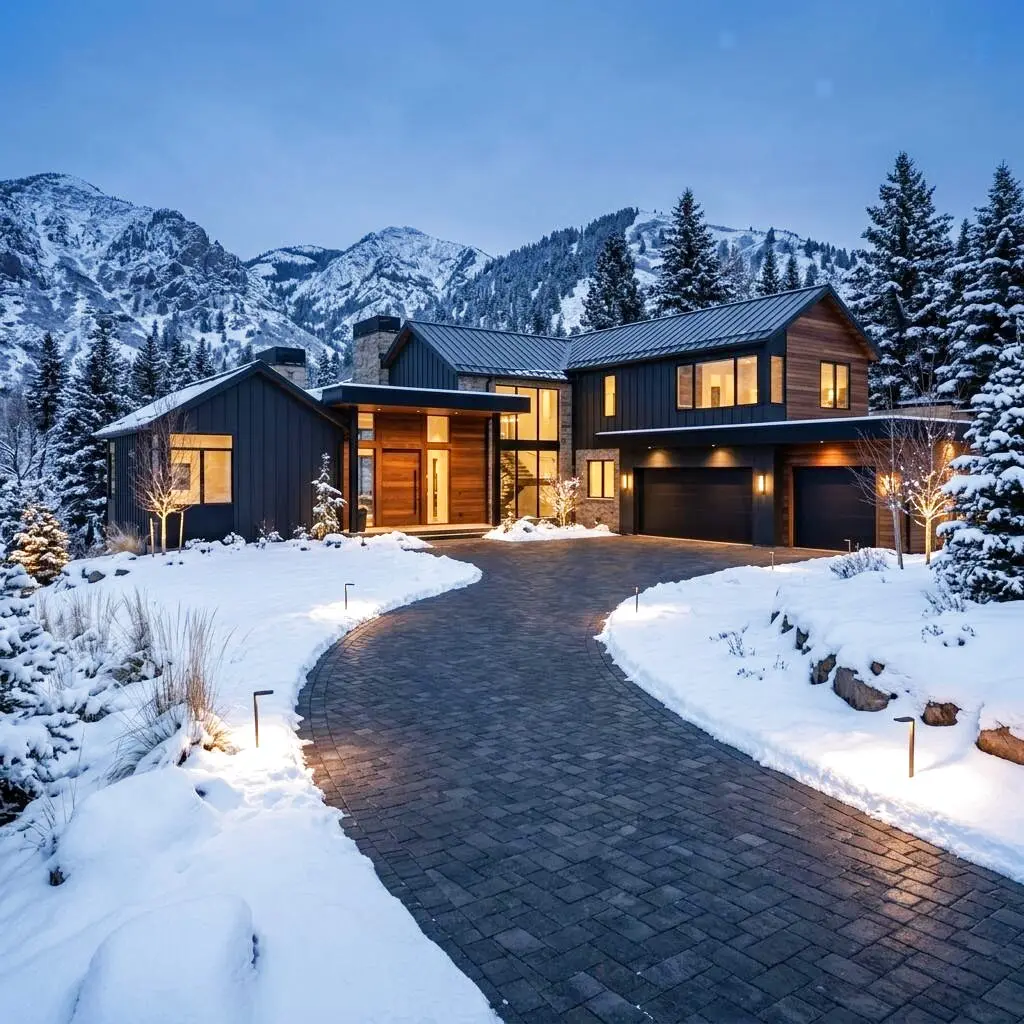
Heated Driveways & Snow-Melt
Never shovel snow again. Effortless Utah winters.
Service Tiers
Tire Track Heating
Targeted electric heating mats for essential tire tracks.
- Electric heating mats
- Targeted installation
- Automated snow sensors
- Retrofit options available
Full Driveway Electric
Complete coverage using high-efficiency electric systems.
- Full surface coverage
- Advanced control panels
- Rapid heat response
- Zero maintenance
Premium Hydronic System
The ultimate luxury snow-melt system using heated fluids.
- Dedicated boiler system
- PEX tubing network
- Lowest operating cost
- Ideal for massive driveways
- Smart home integration
Key Benefits
- Eliminate physical labor of shoveling snow
- Prevent dangerous ice accumulation
- Protect concrete from salt and chemical damage
- Increase property value and winter curb appeal
- Fully automated—turns on when it senses snow
Our Process
System Design
Calculating heat load and choosing electric vs. hydronic.
Demolition (if replacing)
Removing existing concrete or asphalt.
System Layout
Laying cables or PEX tubing with precise spacing.
Pouring & Sealing
Pouring new concrete over the system.
System Commissioning
Testing sensors, boilers, and controls.
Cost Guide
Snow-melt pricing depends on two decisions: how much of the driveway you heat, and whether you choose electric or hydronic. A targeted electric tire-track system can start around $3.5k, while a full hydronic system with a dedicated boiler for a large Park City driveway can exceed $25k. Utah's heavy mountain snowfall makes coverage and boiler sizing especially important, and the estimates below reflect our typical Wasatch and Summit County installs.
Electric vs. hydronic
Electric mats are cheaper to install but cost more per storm to run; hydronic requires a boiler (adding $8k–$14k upfront) yet operates far more economically over large areas — the crossover point is usually around 600–800 square feet.
Total heated area
Heating only the two tire tracks can cut material and energy costs by more than half compared to full-slab coverage, an important lever on long mountain driveways.
New pour vs. retrofit
Embedding cable or PEX in a fresh concrete pour is most reliable; retrofitting mats under existing slabs limits options and can add labor without matching new-pour performance.
Boiler and controls
A high-efficiency condensing boiler, manifold, and smart snow/moisture sensors add cost but are what make a hydronic system efficient and truly hands-off.
Slope and drainage
Steep Utah driveways may need extra sensor zones and careful drainage design so meltwater doesn't refreeze at the base — a real safety consideration.
Project Timeline
System design & heat-load calc
1–2 weeksWe calculate the heat load for your climate zone and driveway size, then specify electric or hydronic and lay out zones and sensors.
Demolition (if replacing)
2–4 daysRemoval and haul-off of existing concrete or asphalt where a new pour is required.
System layout
2–4 daysPlacing and securing heating cable or PEX tubing at precise spacing, plus sensor and manifold rough-in.
Concrete pour & cure
1 weekPouring the slab over the system and allowing proper cure time before any load or heating.
Commissioning & testing
1–2 daysPressure-testing hydronic loops, wiring the boiler or panel, calibrating snow sensors, and a full activation test.
Materials & Options
Cross-linked PEX tubing
Oxygen-barrier PEX is the backbone of a hydronic driveway — flexible, freeze-resistant, and rated for decades embedded in concrete.
Self-regulating electric cable
Modern electric mats and cables adjust output to temperature, avoiding hot spots and reducing energy waste versus older constant-wattage designs.
Condensing boiler
A high-efficiency condensing boiler paired with a glycol mix delivers the lowest operating cost for large hydronic systems in cold Utah winters.
Automatic snow sensors
Combined temperature-and-moisture aerial or in-slab sensors activate the system only when it is both cold and precipitating, so it never runs needlessly.
Fiber-reinforced concrete
Fiber-reinforced or rebar-supported slabs resist cracking from thermal cycling as the system repeatedly heats and cools.
Permits in Utah
A heated driveway involves both electrical and — for hydronic systems — mechanical and gas work, so a permit is required in every Utah jurisdiction. Electrical inspectors verify the dedicated circuits, GFCI protection, and panel capacity; mechanical and plumbing inspectors sign off on the boiler, gas line, and glycol loop. If you are pouring new concrete near the public right-of-way or an apron, some cities also require a driveway or encroachment permit. We coordinate the electrical and mechanical permits and schedule inspections at rough-in and commissioning.
Maintenance
- Have the boiler and glycol concentration serviced annually before the first snowfall on hydronic systems.
- Test the snow sensors at the start of each winter by triggering a manual cycle to confirm activation.
- Keep the slab clear of ice-melt chemicals containing chlorides, which can degrade concrete over the system.
- Check the controller's error log after the season for any tripped zones or sensor faults.
- Verify that meltwater drainage channels stay clear so runoff cannot refreeze at the driveway base.
Common Mistakes to Avoid
Choosing electric for a very large driveway
Electric operating costs scale with area, so a big all-electric driveway can cost several times more per storm than hydronic would over its life.
Skipping automatic sensors
A manually operated system either gets forgotten (leaving ice) or left on too long (wasting hundreds of dollars in energy each winter).
Ignoring where the meltwater goes
Without drainage planning, water melts on the slab and refreezes at the bottom of the driveway, creating a dangerous ice sheet the system does not cover.
Retrofitting under a slab that will crack
Forcing mats under an old, already-failing slab wastes money because the concrete's movement can damage the heating element within a season or two.
Related Services
Frequently Asked Questions
Request an Estimate
Tell us about your heated driveways & snow-melt project.